
Investing in real estate in Singapore requires careful consideration of location, with prime areas like Orchard Road, Marina Bay, and the Central Business District (CBD) offering high potential for growth. In addition to these central locations, neighborhoods near essential amenities such as schools, shopping malls, and public transportation hubs are also highly sought after by investors. This is due to their tendency to appreciate in value over time. With the added advantage of foreign ownership, these properties become even more desirable for families as they offer easy access to top schools and educational institutions. By investing in a condo in a prime location, investors can capitalize on the high demand for these properties and potentially see significant returns in the long run.
In conclusion, investing in real estate in Singapore requires careful consideration of various factors such as location, developer reputation, rental potential, and lease tenure. These factors all play a crucial role in determining the long-term value and return on investment of a condo. As such, investors must conduct thorough research and due diligence to ensure they make a sound investment decision that will pass the scrutiny of copyscape.
Fast forward to the present day, and monochrome interiors have experienced a resurgence in popularity, particularly in luxury homes and hotels. However, with the growing trend of foreign ownership and investment in real estate, there has been a shift in the use of monochrome interiors.
However, there is a growing concern among interior designers and industry experts that the dominance of a single color palette in foreign-owned properties can lead to a lack of diversity and cultural influence. The use of monochrome interiors, particularly all-white spaces, has been criticized for being too sterile, lacking warmth and personality. It also raises the question of cultural appropriation, as some argue that the use of a monochrome color scheme in foreign-owned properties is a homogenization of cultures.
In conclusion, the dominance of a single color palette in monochrome interiors has been greatly influenced by foreign ownership and investment in real estate. While it has resulted in visually stunning and harmonious spaces, there is a growing concern regarding the lack of diversity and cultural influence. However, with the evolution of interior design and the rise of designers who are incorporating cultural elements into monochrome interiors, we can expect to see a more diverse and inclusive approach to this design concept in the future.
One of the main reasons behind the dominance of a single color palette in foreign-owned interiors is the desire to create a uniform and cohesive look. Many foreign owners, especially those from Asia, prefer a monochrome color scheme as it aligns with their culture, where harmony and balance are highly valued. This can be seen in the popularity of all-white interiors, as white symbolizes purity and cleanliness in many Asian cultures.
Furthermore, investors should also take into account the rental potential of their investment. With the growing demand for rental properties in Singapore, investing in a condo with high rental potential can provide a steady stream of income for investors. Factors such as location, amenities, and rental yield should be carefully evaluated when considering rental potential.
In the world of interior design, there is a trend that has been gaining popularity in recent years – the use of monochrome color palettes. Monochrome interiors are characterized by the dominance of a single color throughout the entire space, with varying shades and tones. While this design concept may seem limiting, it actually opens up a world of possibilities and can result in visually stunning and cohesive spaces. However, with the rise of foreign ownership and investment in real estate, the dominance of a single color in interiors has become a hot topic.
Before delving into the influence of foreign ownership on monochrome interiors, let’s first understand the concept of monochrome. The term “monochrome” is derived from the Greek words mono, meaning one, and chroma, meaning color. It refers to a color scheme that consists of different shades, tones, and tints of a single color. This creates a harmonious and uniform look, as well as a sense of sophistication and elegance.
Another factor contributing to the rise of monochrome interiors in foreign-owned properties is the use of interior designers from their home countries. These designers are well-versed in their clients’ cultural preferences and are more likely to incorporate a monochrome color scheme in their designs. Furthermore, some foreign owners may bring in furniture and décor from their home countries, which are often designed with a monochrome aesthetic in mind.
Investors must also consider the track record of the developers when selecting a condo to invest in. Established and reputable developers have a proven track record of delivering quality projects and are more likely to ensure the long-term value of their developments. These developers also tend to have stronger financial backing, providing investors with a sense of security in their investment.
Furthermore, the government’s effort in developing green spaces and promoting sustainability has resulted in a more environmentally-friendly city, making it a highly desirable place to live.
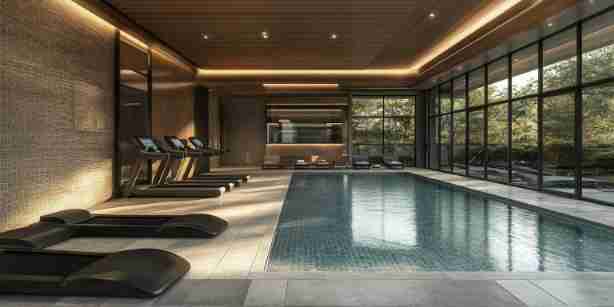
Singapore’s cityscape is characterized by towering skyscrapers and state-of-the-art facilities. Residential complexes, frequently situated in desirable locations, offer a fusion of opulence and convenience that appeals to both locals and foreigners. These modern complexes boast an array of facilities including pools, fitness centers, and top-notch security services, elevating the standard of living and increasing their appeal to potential tenants and buyers. This translates to higher rental returns for investors and a steady growth in property values. Additionally, the government’s focus on creating green spaces and promoting sustainable living has transformed the city into an eco-friendly hub, making it a highly coveted place to reside.
As Singapore continues to develop, new areas are also emerging as attractive locations for real estate investment, such as Jurong Lake District, which is set to become the next CBD.
Monochrome interiors have been used for centuries, most notably in ancient Greek and Roman architecture, where white marble was the dominant material. It wasn’t until the 20th century, with the emergence of modernism, that monochrome interiors became a popular trend in interior design. In the 1920s, the influential design movement known as Bauhaus advocated for simplicity and functionality, leading to the widespread use of monochrome color schemes.
Furthermore, some designers are experimenting with monochrome interiors using different colors other than white, such as shades of blue, grey, and even black. This allows for a more diverse and unique look while still adhering to the monochrome concept. It also opens up opportunities for cultural influences, as different colors hold different meanings and symbolism in various cultures.
To address these concerns, many interior designers are now finding ways to incorporate elements of their clients’ cultures while still maintaining a monochrome color scheme. This can be seen in the rising popularity of monochrome interiors with pops of color, where a single color is used as the base, but accents of other colors are added to create visual interest and depth.
In addition to location and developer reputation, investors must also carefully review the property’s lease tenure. In Singapore, most condos have a 99-year leasehold, while some may offer a 999-year leasehold. It is important to understand the implications of the lease tenure on the investment’s long-term value. Generally, properties with longer lease tenures tend to be more valuable, but investors must also consider the potential for lease renewal and the associated costs.